


Key Points
- CP rates reflect wholesale private funding costs, T-bills reflect the near risk-free anchor, the spread between them is a clean stress proxy.
- A widening CP minus T-bill gap often signals tighter funding conditions and rising perceived risk, a narrowing gap often signals easing.
- The most useful signal is persistence, not a one-day spike, confirm with weekly closes.
- Always cross-check with high-yield spreads, DXY, and 10-year real yields before treating it as a regime shift.
- This is not a buy or sell signal, it is a context dial for liquidity and risk tolerance.
If you want quick definitions for terms like commercial paper, T-bills, repo, DXY, and real yields, see the Crypto Glossary.
Quick Answer
Commercial Paper (CP) is short-term unsecured debt issued by high-grade corporates. The 90-day AA financial CP rate is a simple benchmark for private dollar funding costs. The 3-month Treasury bill rate is the near risk-free anchor. A “TED-style” gap built as CP minus T-bills is a fast way to see whether private funding is becoming more expensive relative to safety.
When CP minus T-bills widens and holds, funding conditions are tightening, credit usually gets choosier, and risk appetite often fades with a lag. When it narrows and stays narrow, stress is easing and liquidity usually feels better. Use it as a regime filter, then confirm with credit spreads and the dollar before you adjust risk.
What Are CP Rates, T-Bills, And A TED-Style Gap
Commercial Paper (CP) is short-term unsecured borrowing for corporates. The 90-day AA financial CP rate is a clean benchmark for wholesale funding.
The 3-month T-bill rate is the near risk-free anchor.
A TED-style gap here is simple, CP minus T-bills.
- Gap widening means private funding costs are rising relative to safe bills, stress or perceived risk is rising.
- Gap narrowing means stress is fading and funding conditions are easing.
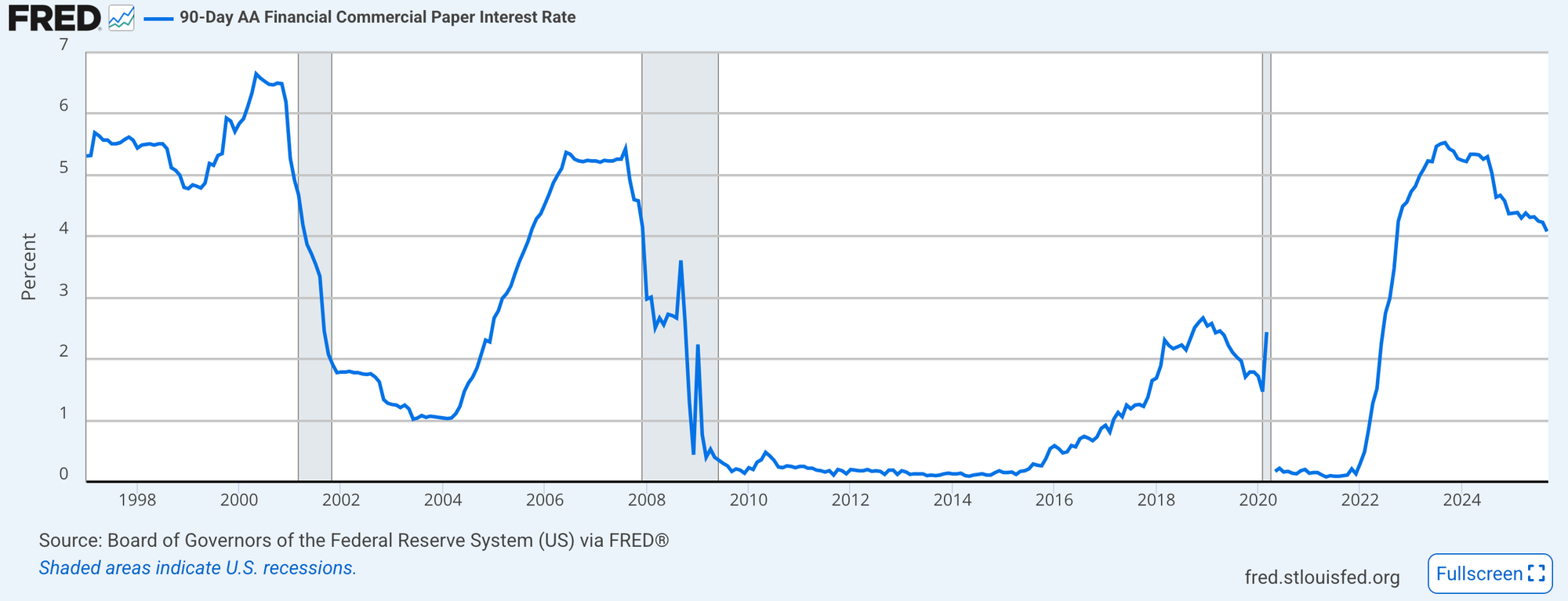
CP tracks policy and credit risk. Sharp jumps without a similar move in T-bills often flag funding tension that can spill into broader markets.
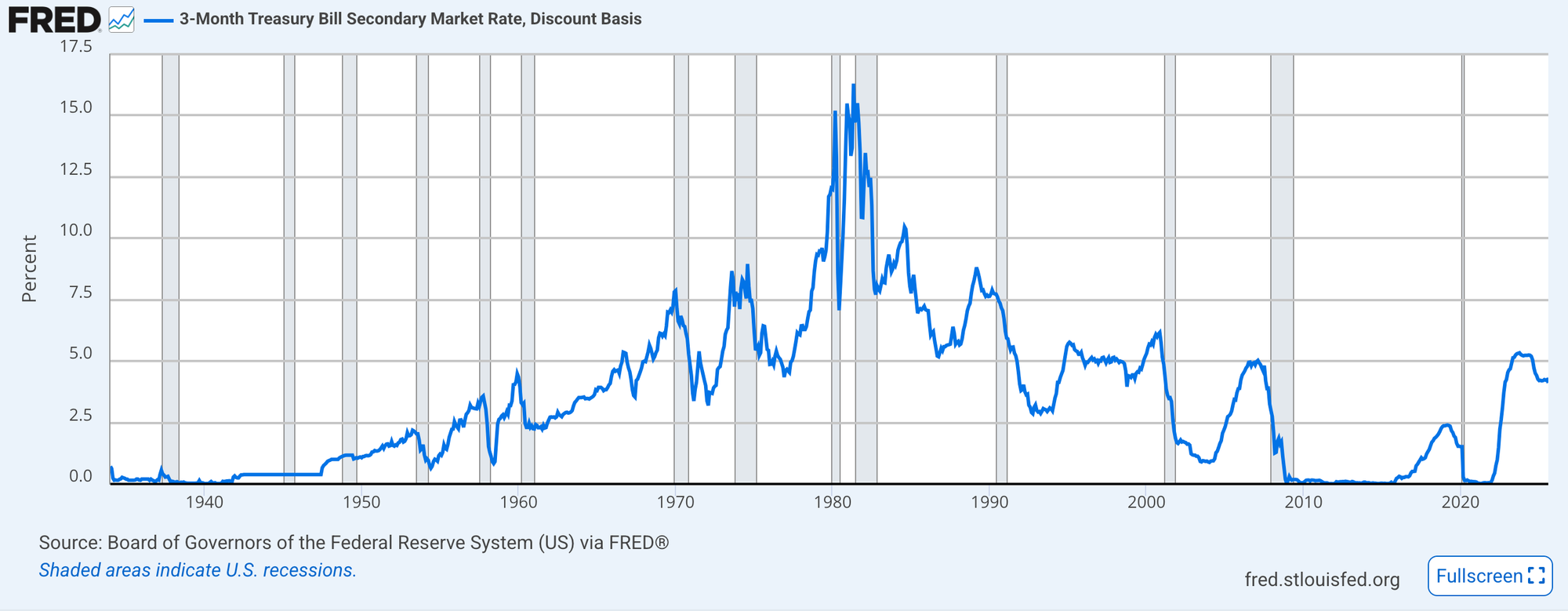
T-bills reflect the policy floor and safety demand. Crisis weeks can push bills around through flight-to-quality behaviour.
How To Build The Spread In FRED
Step-By-Step:
- Open both FRED series: DCPF3M and TB3MS.
- Click Edit Graph, then Add Line to combine them on one chart.
- Under Formula, type a-b to plot CP minus T-bills.
- Use a long window for regime context, then add a weekly view to smooth noise.
How To Read It:
- Above zero means CP trades above bills, which is normal.
- Fast vertical bursts that persist are the real tells, especially if they hold beyond a few sessions.
Practical Thresholds
Guide rails, not gospel, always pair with trend and cross-checks.
- 0 to 40 bps and stable: ordinary conditions.
- 40 to 100 bps with persistence: tightening backdrop, funding gets choosier.
- Above 100 bps or a vertical spike that holds: acute stress, watch credit and liquidity closely.
- Round-trip spikes that fade within a week: often event noise, wait for the weekly close before changing stance.
Why It Matters For Risk And Bitcoin
A wider CP minus T-bill spread means private funding costs are rising. That often travels with widening credit spreads, dealers trimming balance-sheet, and cash becoming more defensive.
Crypto is not funded through commercial paper, but it swims in the same dollar pool. Persistent funding stress often shows up as weaker risk appetite and thinner liquidity. Narrowing spreads usually align with easier conditions and better follow-through when risk tries to trend.
Cross-Checks To Confirm Or Fade The Signal
Use These Confirmations:
- High-yield and investment-grade spreads: widening alongside a rising CP minus bill gap supports the stress read.
- USD and real yields: firmer DXY and higher real yields alongside a wider gap is a tougher mix for risk.
- Policy and facilities: bill supply and standing repo tools can mute spikes, do not overreact to one print.
- Bill curve behaviour: front bills richening versus 3-month can exaggerate the gap through collateral demand.
A Simple Workflow You Can Reuse
- Daily check: look at CP, T-bills, and the CP minus bill gap on a 1-year and 5-year window.
- Flag persistence: two to three consecutive sessions higher matters more than a one-day pop.
- Cross-check: high-yield OAS, DXY, and 10-year real yields, look for alignment.
- Translate to risk: conditions are usually friendlier when the gap trends down while credit is steady and the dollar softens. Conditions are usually harsher when the gap trends up alongside wider credit.
- Review weekly: use weekly closes to confirm regime changes.
Mini FAQs
Is CP Minus T-Bills The Same As The TED Spread?
Classic TED used Eurodollar style interbank pricing versus T-bills. CP minus T-bills is a similar funding stress proxy built from observable cash instruments.
Can The Gap Widen Even If Policy Is Easing?
Yes. Private credit risk can rise or bill demand can surge, which can widen the gap even during cuts.
What Timeframe Works Best?
Use daily to catch turns, but rely on weekly closes to judge regime changes.
If this helped you read funding stress without guesswork, join Alpha Insider for Macro Heat dashboards, calendar previews for key prints, and a weekly positioning watchlist.
Alpha Insider members get:
➡️ Kairos timing windows to plan entries before the crowd moves
➡️ A full DCA Targets page with levels mapped for this cycle
➡️ Exclusive member videos breaking down charts in plain English
➡️ A private Telegram community where conviction is shared daily
➡️ A dedicated Macro Analysis page with regularly updated analysis and monthly reports
This isn’t noise… it’s the full playbook.
Legal & Risk Notice
This content is educational and not investment advice. Markets involve risk… do your own research, manage position sizing, and never risk money you cannot afford to lose.


Discussion