


Key Points
- PMIs are diffusion surveys that sit on a 0 to 100 scale, 50 is the break-even line. Above 50 implies expansion, below 50 implies contraction.
- Manufacturing is smaller than services, but it often swings harder and can lead turns in the cycle.
- New Orders is usually the cleanest sub-index for early direction, it often turns before production, backlogs, and hiring.
- Treat levels as context and slopes as the real message, especially around the 49 to 51 transition zone.
- This guide is part of Macro For Beginners.
- For quick definitions of terms used here, see the Crypto Glossary.
Quick Answer
PMIs (Purchasing Managers’ Indexes) are monthly surveys where firms report whether activity improved, worsened, or stayed the same. The results are converted into a diffusion index where 50 is the break-even line. They are useful because they move early and often reflect changes in demand, margins, and hiring before slower data confirms the turn.
Use PMIs to judge momentum, not to predict one-day market moves. The best signal is persistence, watch the three-month slope of the headline, then use New Orders as the timing tell. Confirm the message with one credit dial and one rates dial before treating a move as a regime shift.
What PMIs Actually Measure
Purchasing Managers’ Indexes are diffusion surveys. Each month firms say whether activity rose, fell, or was unchanged. The headline prints sit on a 0 to 100 scale with 50 as the break-even line.
What PMIs are good for:
- Early growth pulse: faster than GDP style releases
- Margin and earnings context: demand and inventories often show up here first
- Labour momentum hint: employment sub-indices can flag stabilisation or softening
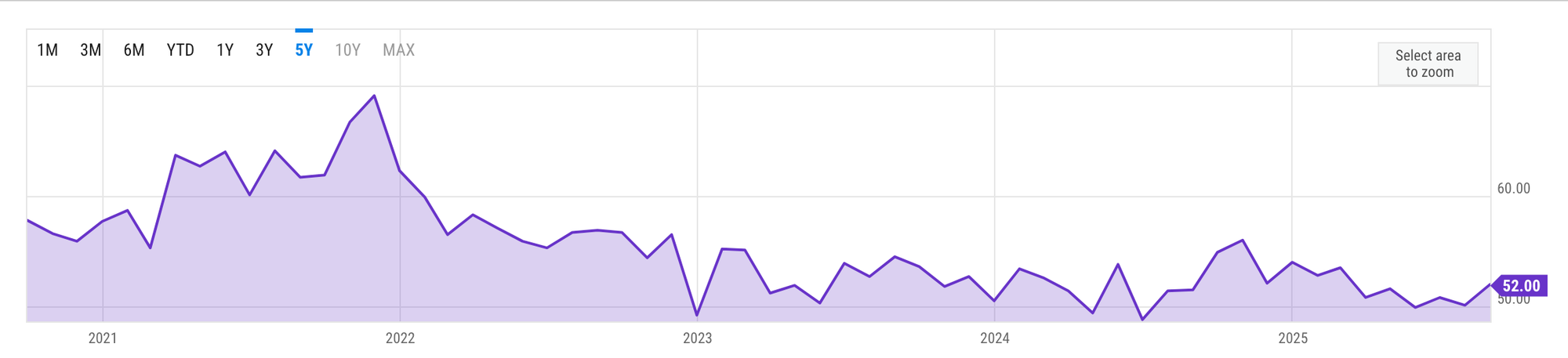
Services carry more weight in the US economy. Sustained readings above 50 often imply growth is still running through employment and profits even when goods are soft.
Manufacturing Vs Services, Why Goods Weakness Still Matters
Manufacturing is smaller than services, but it often swings harder and can lead the cycle. A long run below 50 in manufacturing tends to cool orders, capex, and inventories, then it leaks into transport, advertising, and hiring with a lag.
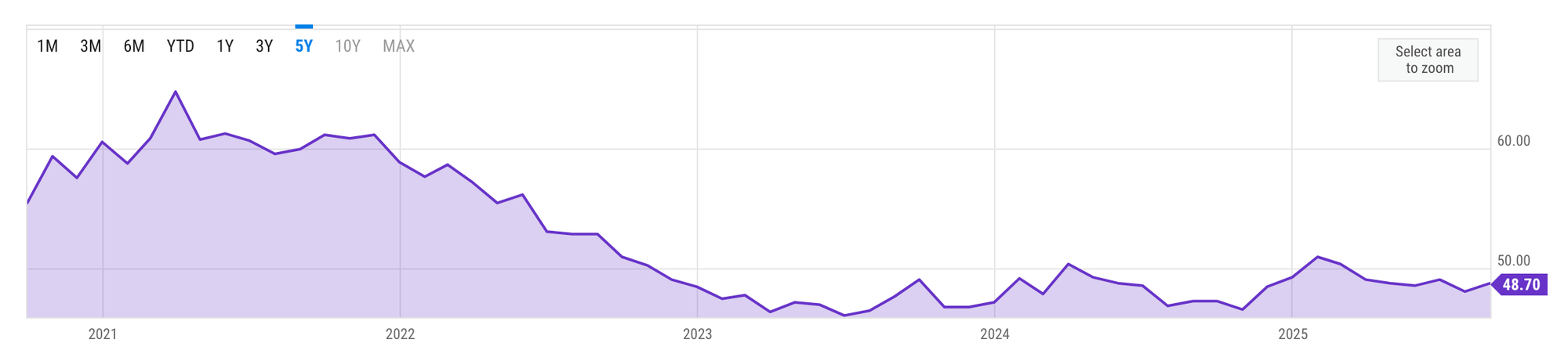
Focus on the slope. Persistent climbs from below 50 often mark early recoveries, while repeated failures near 50 warn the slowdown is still present.
The New Orders Tell
The cleanest timing cue inside PMIs is New Orders. It often leads production, backlogs, and employment.
Three practical reads:
- New Orders above 50 while the headline is below 50: early green shoots, risk can improve if it persists.
- New Orders minus Inventories rising: firms may lift output to rebuild stock.
- New Orders below 50 with falling Backlogs: demand is fading, margin pressure often follows.
Practical Thresholds
Guide rails, use with trend and other dials.
- Headline 52 to 55 and rising: healthier expansion, earnings pressure usually lower.
- Headline 49 to 51 and choppy: transition zone, wait for persistence.
- Headline below 49 for several months: contraction risk, respect credit and profits.
- New Orders above 50 for 2 to 3 months: higher odds of a growth inflection.
How To Pair PMIs With Labour And Markets
- Pairing reduces false positives. PMIs can wobble around 50, confirmation tells you whether conditions are truly changing.
- Employment sub-indices drifting up: hiring momentum stabilises, wage pressure may linger.
- High-yield spreads widening while PMIs roll over: risk appetite often fades and tends to persist.
- Dollar and real yields falling into a PMI upturn: conditions can become friendlier for higher beta assets.
- Inventories rising with weak New Orders: margin squeeze risk rises for cyclicals.
Simple Workflow You Can Reuse
- Record Manufacturing and Services headlines monthly, mark above or below 50 and the three-month slope.
- Add New Orders and New Orders minus Inventories where available.
- Cross-check high-yield spreads, 10-year real yields, and DXY for confirmation.
- For Bitcoin context, lean constructive when Services stays above 50 and Manufacturing New Orders turns up, lean cautious when both headlines trend below 50 with falling orders.
Mini FAQs
Can services stay strong while manufacturing is weak?
Yes, for a while. If goods weakness persists, services often soften with a lag.
Do levels or changes matter more?
The change with persistence matters most. Levels frame the backdrop, slopes drive decisions.
Are PMIs leading or coincident?
They are early signals, especially New Orders. Employment sub-indices tend to lag.
If this helped you read PMIs without guesswork, join Alpha Insider for Macro Heat dashboards, calendar previews for key prints, and a weekly positioning watchlist.
Alpha Insider members get:
➡️ Kairos timing windows to plan entries before the crowd moves
➡️ A full DCA Targets page with levels mapped for this cycle
➡️ Exclusive member videos breaking down charts in plain English
Ready-made playbook, use it.
Legal & Risk Notice
This guide is for education only and is not financial, investment, legal, accounting, or tax advice. Nothing here is a recommendation to buy, sell, or use any product or service. Markets involve risk and losses can happen. Verify information independently and make decisions that fit your situation.


Discussion