


Altcoin season is one of the most searched questions in crypto, and for good reason. Every cycle, traders and investors try to work out when capital will finally move beyond Bitcoin and into the rest of the market. The problem is that most people call it too early.
A real altseason does not start because social media gets noisy, a few random coins pump, or people become bored waiting for Bitcoin. It usually begins when capital rotation broadens across the market in a measurable way. That means Bitcoin stops absorbing most of the attention, Ethereum starts performing better against Bitcoin, and strength spreads into mid and low market caps.
In 2026, that framework matters more than ever. If you are asking when altcoin season will start, the better question is what conditions usually appear before it becomes obvious to everyone else.
If you want the simple answer, altcoin season usually starts when Bitcoin dominance stalls or falls, Ethereum starts gaining relative strength, and the wider altcoin market begins reclaiming key levels with improving breadth. Until those pieces begin to align, it is usually just isolated rotation, not a full market-wide shift.
For readers who are new to crypto terms, our main Crypto Glossary explains the core language used across the market in clear, simple terms.
What Is Altcoin Season?
Altcoin season is the period when altcoins outperform Bitcoin on a broad basis.
That is the key point. It is not just about one or two large altcoins rising. It is about a wider part of the market starting to outperform the benchmark asset. In practical terms, altseason usually means:
- more altcoins begin rising at the same time
- Ethereum often strengthens against Bitcoin
- Bitcoin dominance starts flattening or falling
- market participation broadens beyond a handful of top names
- traders shift attention from Bitcoin-led safety to higher-risk opportunities
This is also why altseason is often misunderstood. A few strong moves in selected coins can happen at any time. That alone does not mean the market has entered a true altcoin-led phase.
Why People Usually Call Altseason Too Early
Most false altseason calls happen for the same reasons.
First, people see a short burst of strength in a few coins and assume the whole market is rotating. Second, they rely too much on emotion and not enough on breadth. Third, they ignore the fact that Bitcoin can keep dominating capital flows for far longer than expected.
In other words, one hot week in alts is not the same thing as a sustainable shift in leadership.
A better approach is to ask whether the move is broadening across sectors and market caps, or whether the gains are still narrow and selective. If the answer is narrow, the market is usually still in transition rather than in full altseason.
When Does Altcoin Season Usually Start?
Historically, altcoin season tends to appear later in a bullish cycle, not at the beginning.
That does not mean it follows a fixed calendar. Crypto does not move on a neat timetable. But the sequence often looks similar:
- Bitcoin leads first
- Ethereum starts catching up
- Bitcoin dominance slows or rolls over
- capital begins spreading into the wider altcoin market
- participation broadens into more sectors and lower-cap names
This is why timing altseason is difficult. By the time most people feel confident it has started, a good portion of the move may already be underway.
The earlier clues usually come from relative strength and rotation, not from headlines.
Has Altcoin Season Started Yet?
The honest answer is that altseason only starts when the evidence is broad enough to support that call.
If Bitcoin dominance is still rising, if Ethereum is still weak against Bitcoin, or if only a handful of coins are moving while the rest of the market lags, then the market is probably not in full altseason yet.
What you may be seeing instead is:
- selective rotation
- sector-specific speculation
- relief rallies after heavy drawdowns
- short-lived bursts of risk appetite
That distinction matters. A selective rally can still produce opportunities, but it is not the same as a broad altcoin-led phase.
If you want a more market-specific companion to this guide, read our recent breakdown on whether alt season is close, using OTHERS and Bitcoin dominance as the main decision points.
5 Signs Altcoin Season Is Coming
The best way to judge altseason is to track the conditions that tend to appear before broad rotation takes hold.
1. Bitcoin Dominance Stops Rising
Bitcoin dominance shows how much of the total crypto market cap belongs to Bitcoin. When it rises, Bitcoin is taking a larger share of the market. When it stalls or falls, that can suggest capital is starting to spread elsewhere.
A flattening or rolling-over dominance trend is often one of the earliest signs that altcoins may have more room to perform.
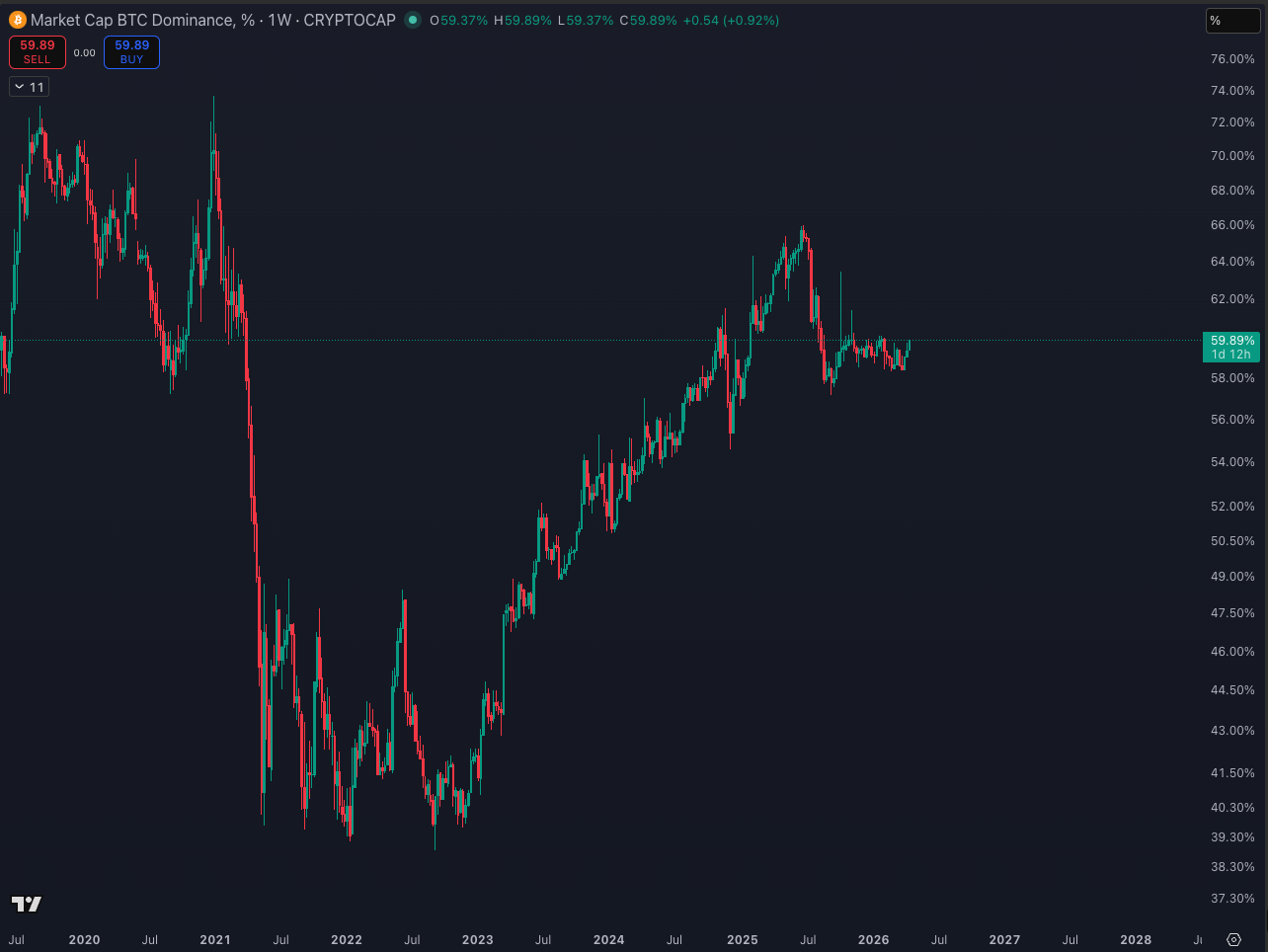
This chart shows whether Bitcoin is gaining or losing share against the rest of crypto. If BTC.D keeps rising, broad altseason is usually harder to sustain.
2. Ethereum Starts Outperforming Bitcoin
Ethereum often acts as the bridge between Bitcoin leadership and wider altcoin participation. When ETH/BTC begins strengthening, it can suggest that the market is becoming more willing to move out the risk curve.
That is why ETH/BTC is one of the most useful relationships to watch. A strong ETH/BTC chart does not guarantee altseason, but a weak one usually makes a full altcoin expansion harder.
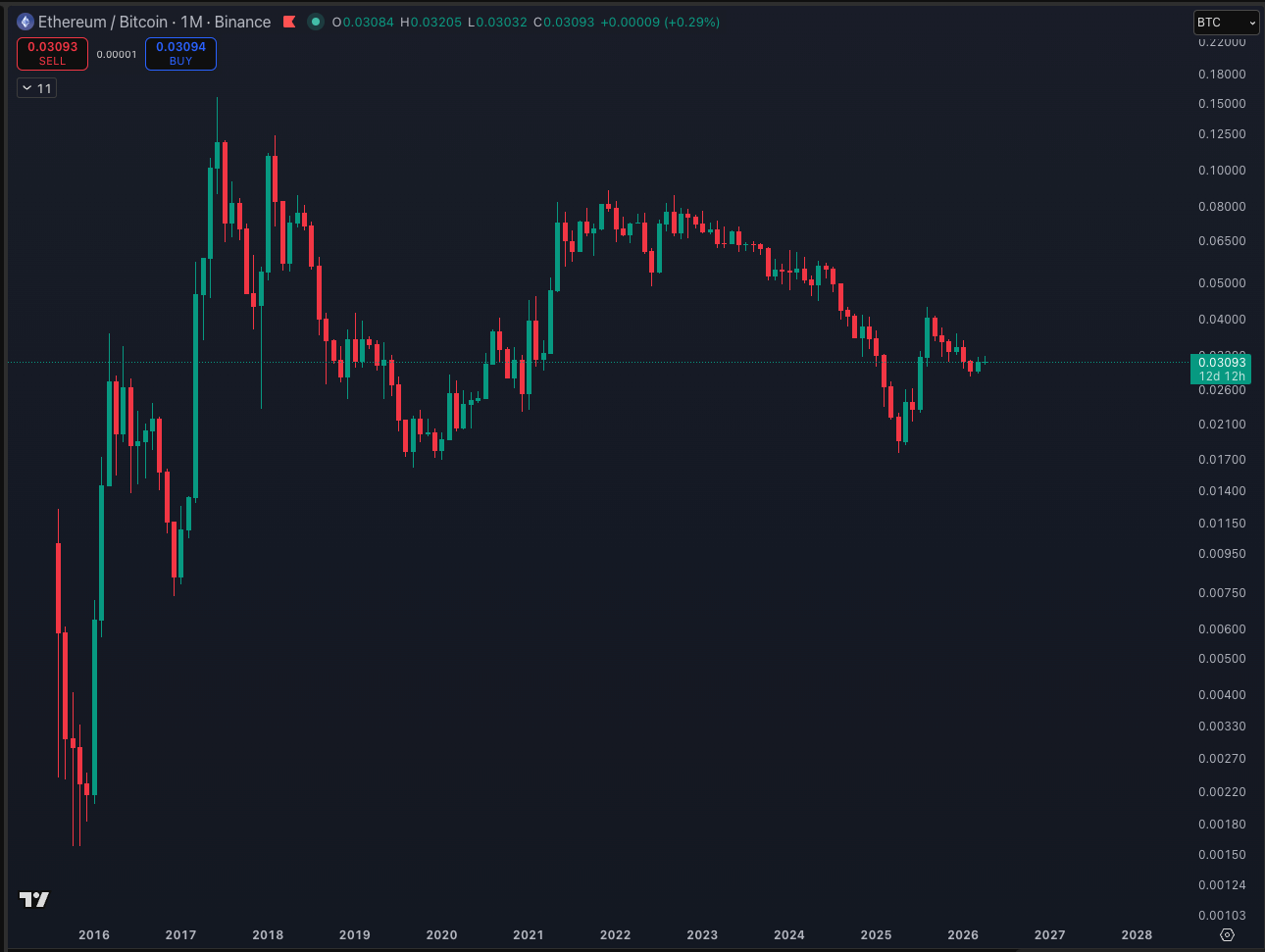
This chart measures Ethereum’s performance relative to Bitcoin, rather than in dollars. If ETH/BTC starts rising with conviction, it often signals improving appetite for alt exposure.
3. OTHERS Or TOTAL3 Begins Reclaiming Key Levels
Broad alt indices such as OTHERS or TOTAL3 can help you judge whether strength is spreading across the market. These charts strip out Bitcoin, or Bitcoin and Ethereum, to focus more directly on altcoin participation.
If these indexes begin reclaiming important levels and holding them, that is often more meaningful than a few large names moving on their own. It suggests the market is becoming healthier under the surface.
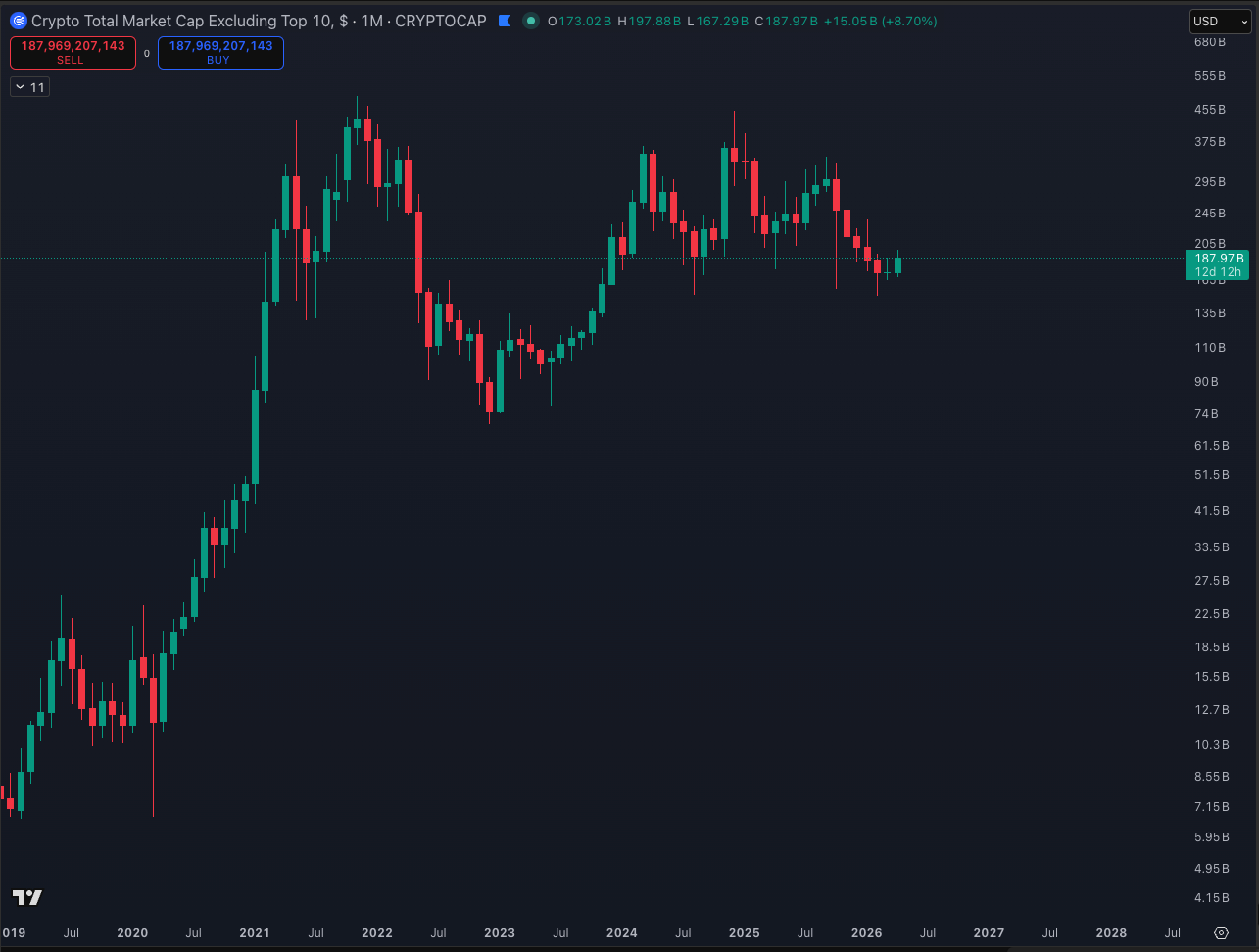
These charts help track whether the wider altcoin market is strengthening. A reclaim followed by sustained acceptance is usually more constructive than a one-day spike.
4. Breadth Improves Across More Coins
Breadth matters because real altseason is not narrow. You want to see more coins participating, more sectors waking up, and fewer moves being driven by a tiny group of names.
This does not mean everything goes up at once. It means the market stops feeling concentrated.
When participation broadens, altseason becomes far more credible.
5. Market Narratives Start Following Price, Not Leading It
This is a subtle point, but an important one. In weak alt environments, narratives usually try to lead price. In stronger alt environments, price begins moving first and narratives catch up afterwards.
That shift often tells you whether money is truly rotating, or whether the market is still relying on speculation without enough confirmation underneath.
Bitcoin Dominance, ETH/BTC And Altseason
If you only watched three things to judge altseason, they would be Bitcoin dominance, ETH/BTC, and a broad altcoin index such as OTHERS or TOTAL3.
Together, they answer three different questions:
- is Bitcoin still absorbing most of the market’s capital?
- is Ethereum gaining strength against Bitcoin?
- is the broader altcoin market actually participating?
This three-part framework is far more useful than chasing trending tickers on social media.
A lot of people want altseason to start because they are emotionally ready for it. Markets do not care. What matters is whether capital is rotating in a way that can be seen across multiple charts, not whether the crowd wants excitement.
Why 2026 Could Matter For Altseason
In 2026, the altseason question matters because the market is still trying to decide whether rotation can broaden meaningfully or stay selective.
That is why the timing debate is so noisy. Some participants are already positioned for a full alt move, while others still see Bitcoin as the stronger anchor. The answer is unlikely to come from one headline or one breakout candle. It will come from the interaction between dominance, relative strength, and wider participation.
That is also why a framework-based approach works better than prediction for its own sake.
Instead of asking whether altseason is guaranteed, it is more useful to ask:
- is Bitcoin dominance losing momentum?
- is ETH/BTC improving?
- are OTHERS or TOTAL3 reclaiming ground?
- is breadth getting stronger?
- is rotation spreading beyond a few obvious names?
When those answers start aligning, the probability of altseason improves materially.
Common Traps To Avoid
There are a few mistakes that repeatedly catch people out.
- assuming one strong week in altcoins means a full altseason has started
- ignoring Bitcoin dominance completely
- focusing only on individual coin charts without tracking market breadth
- confusing speculative narrative bursts with genuine capital rotation
- buying the idea of altseason after the move is already obvious to everyone
The biggest trap is forcing the call too early. The market usually gives clues before it gives confirmation. Good analysis sits between those two points without pretending certainty is higher than it is.
Final Take
So, when will altcoin season start?
Most likely when Bitcoin dominance stops leading, Ethereum begins outperforming Bitcoin, and the broader altcoin market starts reclaiming key levels with improving participation underneath. That is the cleaner answer, even if it is less exciting than a fixed date.
Altseason is not a switch. It is a process. It builds through rotation, relative strength, and breadth. Until those are visible, the market is usually still in the setup phase rather than the full expansion phase.
If you want to track the topic in real time, pair this guide with our recent article on whether alt season is close, where we break down the live decision points using OTHERS and Bitcoin dominance.
Mini FAQ
What Is The Best Indicator For Altseason?
There is no single perfect indicator, but Bitcoin dominance, ETH/BTC, and OTHERS or TOTAL3 are among the most useful together. They help show whether capital is broadening beyond Bitcoin.
Does Altseason Always Happen After Bitcoin Pumps?
Not always in a neat sequence, but Bitcoin often leads first. Broad alt participation usually becomes more likely after Bitcoin strength begins to mature and capital starts rotating outward.
Can Altseason Start While Bitcoin Dominance Is Still Rising?
It can happen in isolated pockets, but a full broad altseason is usually harder while Bitcoin dominance keeps pushing higher. That often means Bitcoin is still taking the larger share of market attention and capital.
Is Ethereum Important For Confirming Altseason?
Yes. Ethereum often acts as an important bridge between Bitcoin and the rest of the altcoin market. If ETH/BTC is weak, it usually makes a full alt expansion less convincing.
How Do I Know If It Is A Real Altseason Or Just A Rally?
Look at breadth. If only a few coins are moving, it is often just a rally in selected names. If strength is spreading across sectors and market caps, the case for true altseason becomes much stronger.
Read Next
If you are following this theme, you may also want to read our live market update: Is Alt Season Close? OTHERS And Bitcoin Dominance Are Near A Decision Point. It works well as a companion piece to this guide because it applies the broader framework to current market behaviour.
Enjoyed This Article?
If this guide helped you understand how altseason usually begins, explore more of our market analysis and educational content across Bitcoin, Ethereum, macro, and crypto rotation.
For more deep dives, keep browsing The Markets Unplugged for data-led breakdowns designed to help you read the market with more clarity and less guesswork.
Legal & Risk Notice
This article is for educational purposes only and should not be considered financial advice. Cryptocurrency markets are volatile, and no indicator or framework can guarantee outcomes. Always do your own research, manage risk carefully, and never invest money you cannot afford to lose.


Discussion