


Key Points
- Miner reserves are a stock measure, how much BTC miners hold. Miner-to-exchange flow is a pace measure, how much BTC is moving toward venues.
- Single spikes can be noise, clusters are the tell. Use persistence, not one print.
- Reserves drifting down while price holds up often means the market is absorbing issuance. Reserves falling fast into weak price is a tougher mix.
- Always cross-check with exchange netflows and acceptance dials (SOPR or Realised PnL Ratio) before treating miner flow as “selling”.
- If you want quick definitions for terms used here (SOPR, Realised PnL Ratio, CDD, VDD, exchange netflows), see the Crypto Glossary.
Quick Answer
Miner reserves track BTC held by miner wallets, a stock measure of potential supply. Miner-to-exchange flow tracks BTC leaving miner wallets toward venues, a pace measure of potential sell pressure. Read them together, stock plus flow gives the cleaner signal.
Answer Block
These metrics do not “call tops” on their own. They help you judge whether issuance pressure is being absorbed quietly, or whether distribution is building into venues. The best use is a weekly routine that looks for outflow clusters, reserves trend, and price acceptance.
What These Metrics Show
Miner Reserves: BTC held by miner wallets, the supply stock.
Miner-To-Exchange Flow: BTC moving from miners toward venues, the supply pace.
Together, they answer one practical question. Is miner issuance being absorbed, or is it starting to lean on the tape.
Bitcoin Miner Outflows
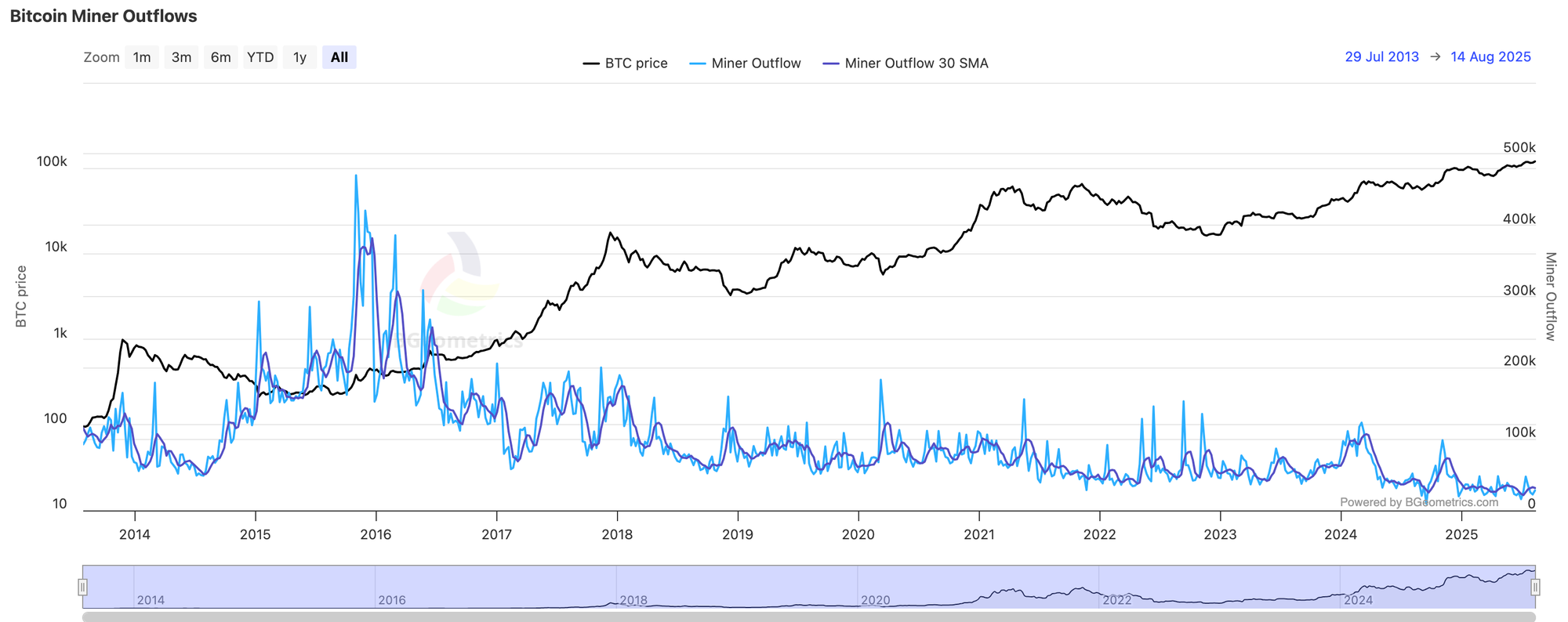
Bitcoin Miner Outflows: Source BGeometrics
Spikes are bursts of distribution. The smoothing line helps you see whether a burst is an outlier, or part of a trend that is building.
How To Read Miner-To-Exchange Flow
What To Focus On:
- Clusters Over Spikes: One large print can be treasury reshuffling. Repeated prints are the pressure signal.
- Size Vs History: Compare current flow to a 30 to 90-day baseline. A big number is only meaningful relative to its own history.
- Event Windows: Halving effects, difficulty jumps, or energy shocks can lift outflows temporarily. Wait for persistence.
- Venue Path: Miner outflow does not guarantee spot selling. Collateral top-ups and OTC settlement can also show up. Confirm with price acceptance.
Bitcoin Miner Reserves
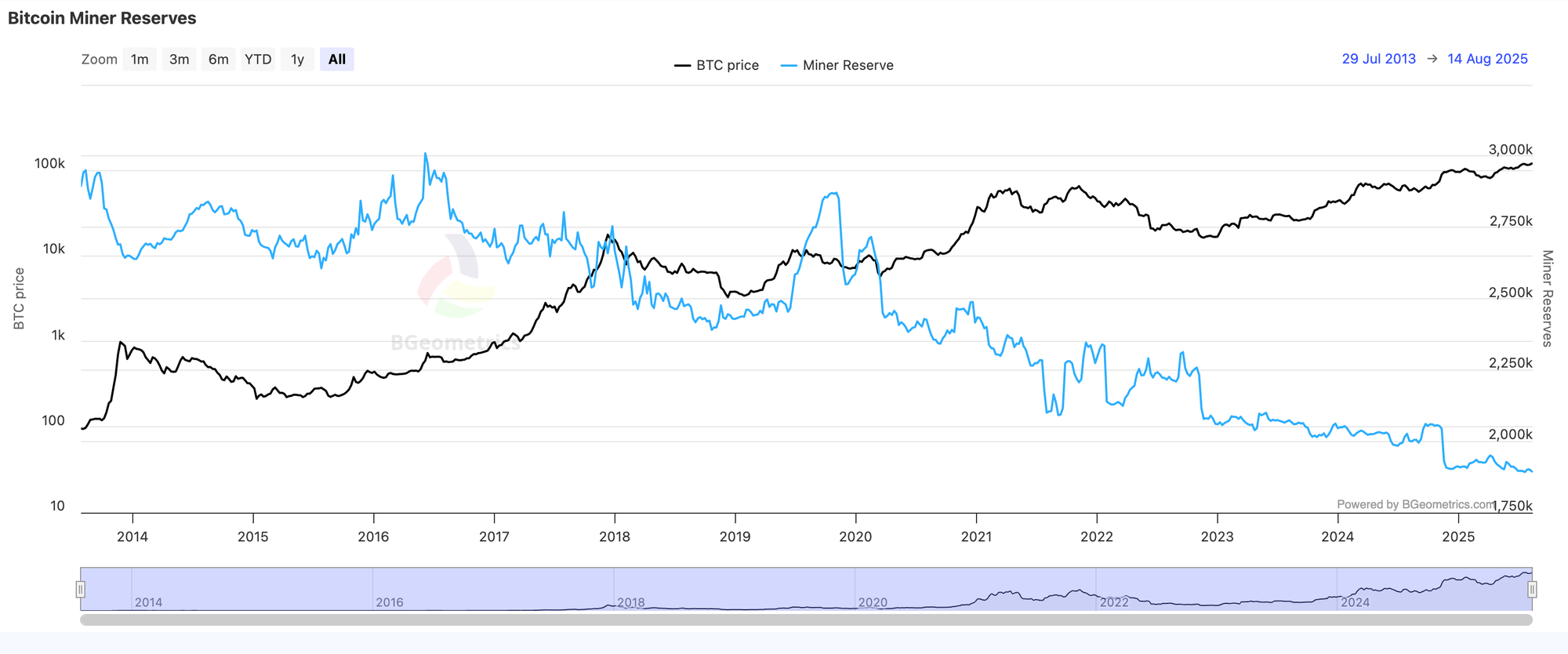
When the line trends down, miners are distributing more than they mine. When it trends up, miners are stacking. Step changes can be re-tagging, always cross-check provider notes.
How To Read Miner Reserves
Downtrend In Reserves: miners are net distributing over time, the tape can still absorb it if price remains accepted.
Sharp Drops: often bookkeeping, re-tagging, or a one-off treasury move. Confirm with outflow clusters and price reaction.
Flat To Rising Reserves: calmer backdrop, issuance pressure is lighter.
Practical Guide Rails
These are guide rails, not gospel.
- Outflow spike without follow-through: treat as noise, wait for a second or third print.
- 7 to 14-day outflow streak: treat as risk tightening context, especially if price starts stalling.
- Reserves trending down while price trends up: often constructive, supply is being absorbed.
- Reserves falling fast while price is weak: miners may be funding operations into soft demand, patience usually pays.
Pairing With Other Dials For Confluence
Confluence matters. Miner flow is one dial, not the whole story.
- Miner outflow streak plus exchange net inflows: more supply reaching venues, risk of overhead supply rises.
- Reserves down plus Realised PnL Ratio above 1.0: profits are being accepted while issuance is absorbed, adds on dips can be cleaner.
- Outflow spikes plus VDD or CDD pops: older coin spending plus miner supply together, distribution risk is higher.
- Flows calm plus funding cool plus open interest rebuilding: a steadier backdrop for methodical scaling.
A Weekly Workflow You Can Reuse
- Log the 7-day miner outflow sum, compare it to the 90-day median.
- Note the miner reserves trend, falling, flat, or rising.
- Cross-check exchange netflows, Realised PnL Ratio or SOPR, CDD or VDD, and a simple price read.
- Act on clusters, tighten when outflows persist into venue inflows and price stalls, add after calm persists and acceptance dials improve.
- Record any re-tagging notes from data providers so step changes are not misread.
Mini FAQs
Are miner outflows always bearish?
No. OTC, collateral movements, and internal treasury shifts exist. Look for persistence and confirm with price acceptance and exchange netflows.
Which matters more, reserves or outflow?
They answer different questions. Reserves are the stock, outflow is the pace. Use both together.
Can this be applied to altcoin miners?
Sometimes, but coverage is often patchy. If you use it, pair it with exchange balance data and a clean price read.
What is the biggest beginner mistake with miner metrics?
Overreacting to one spike. The edge is in clusters and persistence, not a single print.
If this helped you read issuance pressure without guesswork, join Alpha Insider for weekly timing windows, dashboards, and member videos.
Alpha Insider members get:
➡️ Kairos timing windows to plan entries before the crowd moves
➡️ A full DCA Targets page with levels mapped for this cycle
➡️ Exclusive member videos breaking down charts in plain English
➡️ A private Telegram community where conviction is shared daily
This isn’t noise… it’s the full playbook.
Legal & Risk Notice
This guide is for education only, not financial, investment, legal, accounting, or tax advice. Nothing here is a recommendation to buy, sell, or use any product or service. Cryptoassets are high risk and prices can go to zero. Only use amounts you can afford to lose. Availability and legality vary by country, check local rules before acting. You are responsible for your own decisions.


Discussion