


Key Points
- Net liquidity is a simple macro proxy many traders use to judge whether financial conditions are broadly easing or draining.
- The common shortcut is Fed balance sheet minus TGA minus RRP, because all three affect reserves and wider liquidity conditions.
- A rising Fed balance sheet usually supports liquidity, while a rising TGA or RRP usually acts as a drain.
- Bitcoin can respond well to improving liquidity conditions, but this is a backdrop tool, not a standalone trading signal.
- The most useful way to read net liquidity is over two to four weeks, then cross-check it with credit, the dollar, and real yields.
This guide is part of the Macro For Beginners hub. Browse the full hub here.
For quick definitions of key terms used in this guide, see the Crypto Glossary.
Quick Answer
Net liquidity is a simple way to estimate whether broad financial conditions are becoming more supportive or more restrictive for risk assets such as Bitcoin. Many traders track it with a basic formula, Fed balance sheet minus the Treasury General Account minus Overnight Reverse Repo balances. A larger Fed balance sheet often adds support, while a rising TGA or RRP can drain liquidity from the system. It is useful as a macro backdrop, but it works best when you judge persistent direction over several weeks and pair it with other indicators rather than using it in isolation.
What Is Net Liquidity?
Net liquidity is a proxy, not a single official Fed metric. It is a practical shorthand used to estimate whether liquidity is broadly being added to, or drained from, the financial system.
The version many traders watch is:
Fed balance sheet - TGA - RRP
That shortcut matters because all three components influence how much liquidity is circulating through the banking and market system. For Bitcoin traders, it helps frame whether the macro background is becoming more supportive or more restrictive for risk-taking.
How Does The Fed Balance Sheet Affect Liquidity?
A larger Fed balance sheet usually supports liquidity because it tends to mean reserves are being added, or at least conditions are becoming less restrictive. A shrinking balance sheet usually points the other way, especially during quantitative tightening.
What matters most is not one weekly print. It is the direction and persistence of the move.
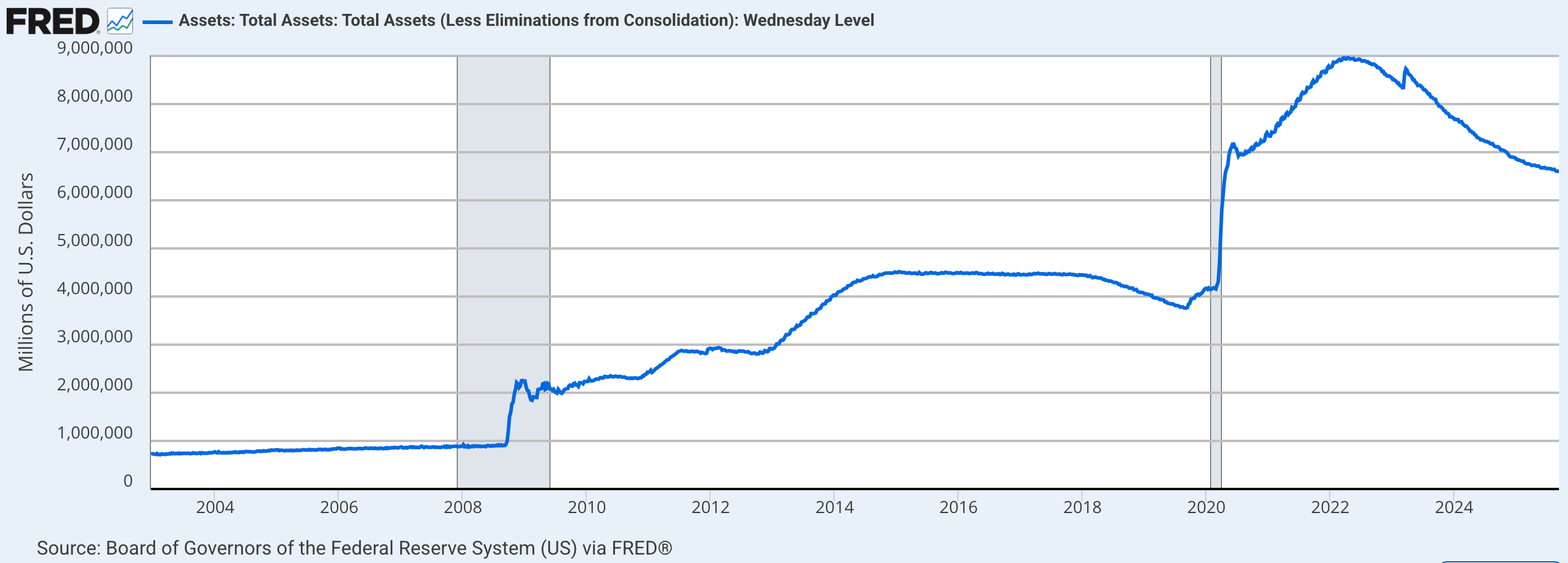
This chart shows the size and direction of the Fed’s balance sheet over time. Sustained rises often align with easier liquidity conditions, while sustained declines usually reflect tightening or balance-sheet runoff.
When WALCL rises steadily, risk assets often get a friendlier macro backdrop. When it trends lower for long enough, that support fades, and markets usually become more sensitive to tightening elsewhere.
Why Does The TGA Matter For Bitcoin Traders?
The Treasury General Account is the US Treasury’s cash balance at the Fed. When the TGA rises, cash is effectively being parked at the Fed rather than circulating through the private system, which can drain reserves and tighten the background.
When the TGA falls, that drag can ease because liquidity flows back into the system.
Large TGA rebuilds, especially after debt-ceiling episodes or around heavy issuance periods, can dominate the weekly liquidity tone. That is why Bitcoin traders should not watch the Fed balance sheet in isolation.
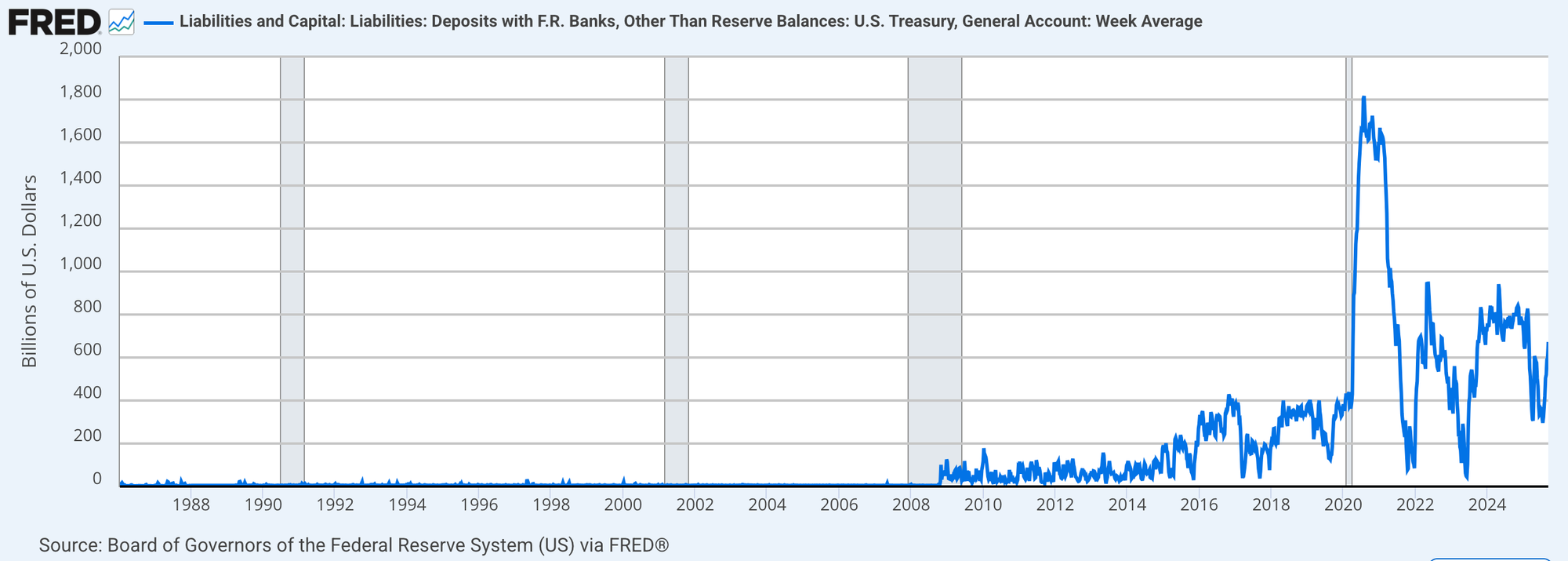
This chart shows when Treasury cash is building at the Fed and when it is being drawn down. Rising TGA balances usually act as a liquidity drain, while falling balances can release some pressure back into the system.
A sharp TGA rebuild can make the macro background feel tighter even if other parts of the liquidity picture look less restrictive.
What Does RRP Tell You About Liquidity Conditions?
The Overnight Reverse Repo facility shows how much cash money market funds prefer to park at the Fed overnight instead of leaving it in private funding markets. When RRP is high or rising, that usually points to cash being absorbed by the facility rather than supporting the wider system.
When RRP is falling, that can help release cash back into markets and ease conditions.
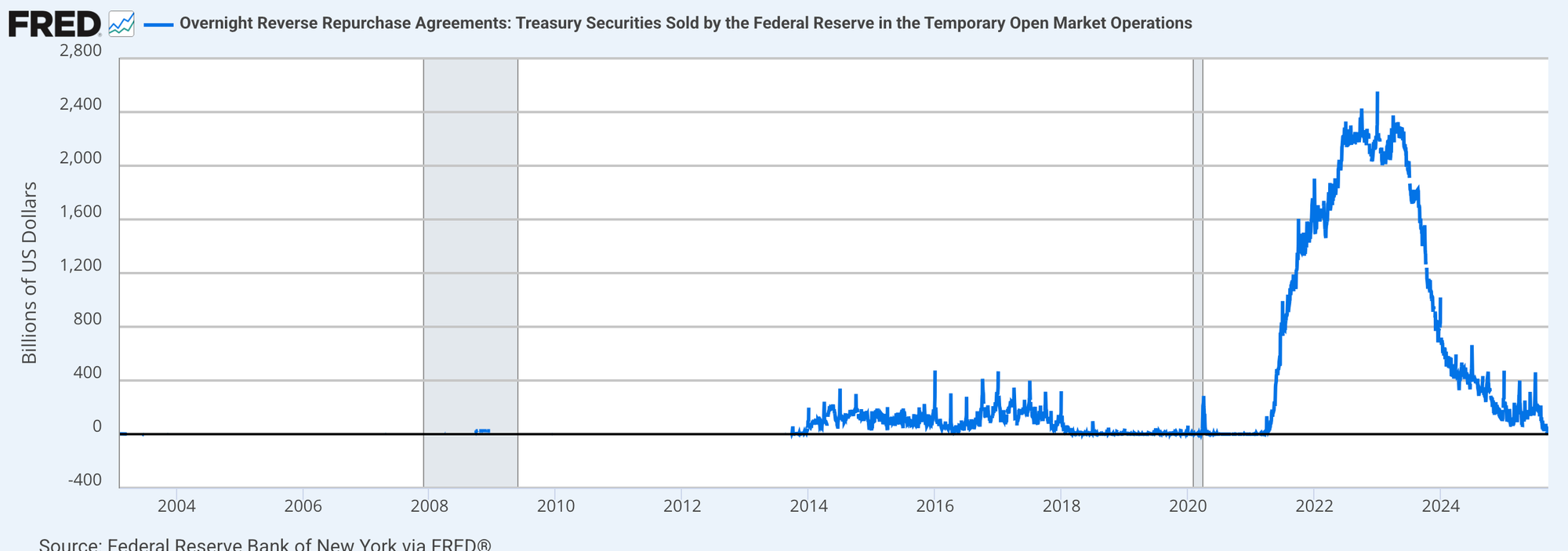
This chart shows how much cash is being parked in the Fed’s reverse repo facility. Rising balances usually point to a tighter background, while falling balances can signal cash moving back into the broader system.
For Bitcoin, the message is not that every RRP move triggers an immediate price response. The point is that persistent easing or persistent drains can shape the macro backdrop risk assets are trading inside.
How Should You Read Net Liquidity Without Overreacting?
The best way to use net liquidity is as a backdrop tool. It tells you whether macro conditions are becoming more supportive or less supportive, but it does not replace market structure, positioning, or price confirmation.
A practical framework looks like this:
- Fed balance sheet up, TGA down, RRP down
Broad easing impulse, usually a friendlier background for beta and Bitcoin if credit conditions stay calm. - Fed balance sheet flat, TGA up, RRP up
Two drains are building at once, usually a tighter background until one of them eases. - QT still running, but TGA and RRP both falling
The picture is mixed, liquidity can still improve if the drains are easing faster than QT is tightening.
This is why persistence matters more than daily noise. A two to four week direction is more useful than a single print.
How Can You Plot A Simple Net Liquidity Line In FRED?
You can build a simple net liquidity line in FRED by putting the three series together and using a formula.
The common setup is:
- WALCL for the Fed balance sheet
- WTREGEN for the Treasury General Account
- RRPONTSYD for Overnight Reverse Repo balances
Then set the formula to:
a - b - c
Use a weekly view and a long time window. That gives you more context and reduces the temptation to overreact to short-term noise.
What Should You Pair Net Liquidity With Before Acting?
Net liquidity becomes much more useful when you cross-check it with other macro and market signals. On its own, it can tell you the background is changing. Paired properly, it tells you whether that background is being confirmed.
The most useful companions are:
- HY OAS, to see whether credit is calm or deteriorating
- DXY, to judge whether dollar strength is tightening the environment
- 10-year real yields, to gauge whether the macro discount rate is becoming more restrictive
- Bitcoin price behaviour and market structure, to confirm whether the macro backdrop is actually being expressed in price
That combination gives you a cleaner framework than treating one liquidity proxy like a complete system.
Mini FAQs
Is net liquidity the same as bank reserves?
No. It is a proxy. It does not capture every moving part, but it tracks several of the biggest forces shaping broad liquidity conditions.
Why can risk assets rally even while QT is running?
Because falling TGA and RRP balances can offset some of the tightening effect. The blend matters more than one line in isolation.
Should Bitcoin traders react to daily liquidity prints?
Usually no. It is more useful to judge persistence over two to four weeks, then compare that backdrop with price, credit, and dollar conditions.
What is the main mistake people make with net liquidity?
Treating it like a direct trading signal. It is better used as a macro context tool that helps explain whether the background is becoming friendlier or tighter.
If this helped you, consider joining Alpha Insider to get the planning tools and member breakdowns that turn education into a repeatable process.
Alpha Insider members get:
➡️ Kairos timing windows to plan entries before the crowd moves
➡️ A full DCA Targets page with levels mapped for this cycle
➡️ Exclusive member videos breaking down charts in plain English
➡️ A private Telegram community where conviction is shared daily
➡️ A dedicated Macro Analysis page with regularly updated analysis and monthly reports
Ready made playbook… use it.
Legal & Risk Notice
This content is educational and not investment advice. Markets involve risk… do your own research, manage position sizing, and never risk money you cannot afford to lose.


Discussion