


Key Points
- Exchange netflow is inflows minus outflows of BTC to tracked exchanges, it is context for liquidity and stress, not a one-bar signal.
- Daily netflows show event noise, weekly netflows reveal clusters and persistence you can actually act on.
- Venue mix matters, inflows to spot-heavy venues often precede selling, derivatives venue inflows can be collateral, not supply.
- Netflows work best when paired with exchange reserves, SOPR or Realised PnL Ratio, CDD or VDD, and funding plus open interest.
- If you want quick definitions for exchange reserves, SOPR, Realised PnL Ratio, CDD, VDD, funding, and open interest, see the Crypto Glossary here.
Quick Answer
Bitcoin exchange netflows measure whether BTC is moving into tracked exchanges (potential supply) or leaving exchanges (potential custody). Positive netflow means more BTC moved into venues than out. Negative netflow means more BTC moved out than in. Use the daily view to spot abrupt bursts around events, then use the weekly view to judge whether the move is real and persistent.
Answer Block
Daily netflows are useful for detecting shocks, but they are noisy and often distorted by exchange housekeeping and wallet reclassification. Weekly netflows compress that noise into clusters. The clean rule is simple, look for direction plus persistence plus venue mix, then confirm with acceptance and liquidity dials before changing stance.
What Are Exchange Netflows?
Exchange netflow is inflows minus outflows of BTC to tracked exchanges over a period.
- Positive netflow: more BTC moved into venues.
- Negative netflow: more BTC moved out to custody or elsewhere.
Netflows are best used as a liquidity context dial. They help you judge whether the market is leaning toward potential sell pressure or tightening float, not whether the next candle will be green or red.
Daily Vs Weekly: Why Timeframe Matters
Daily view: listings, rebalancing, internal shuffles, settlement batching, and headline shocks can dominate.
Weekly view: clusters emerge, noise compresses, and persistence becomes visible.
Rule of thumb: treat direction + persistence + venue mix as the signal. Treat everything else as chatter.
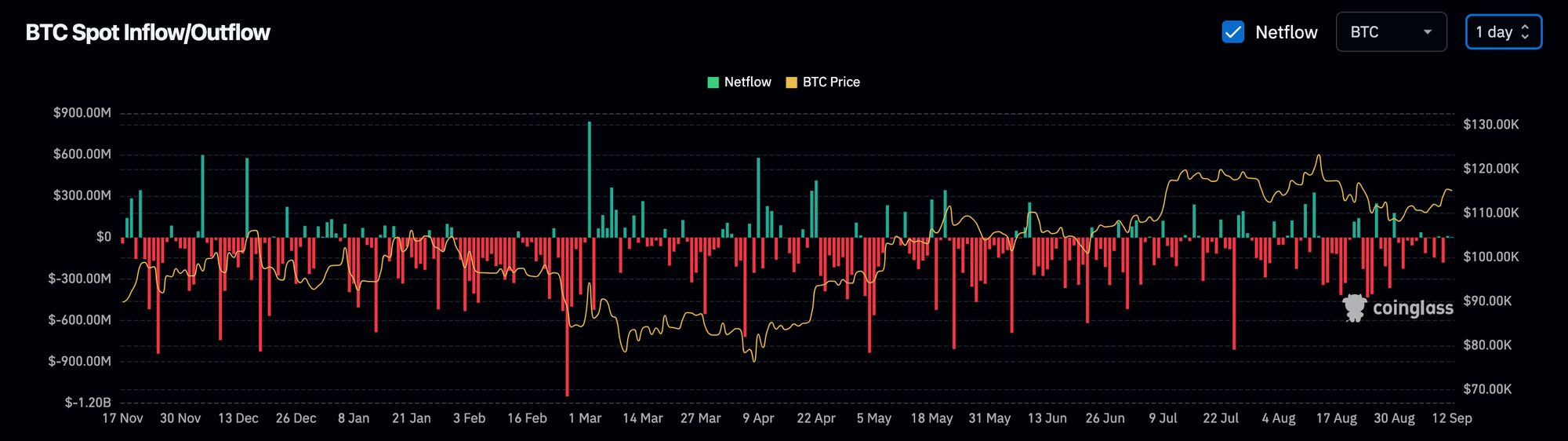
Green bars mark net inflows and red bars mark outflows. Use daily to spot abrupt bursts around events, then verify the story on the weekly view before changing stance.
How To Read The Weekly View Cleanly
Streaks Over Singles: three or more bars in the same direction beats one big print.
Size Vs History: compare to the last 30 to 90 days so you do not overreact to average moves.
Venue Mix: inflows to spot-heavy venues often precede selling, inflows to derivatives venues can be collateral top-ups rather than immediate supply.
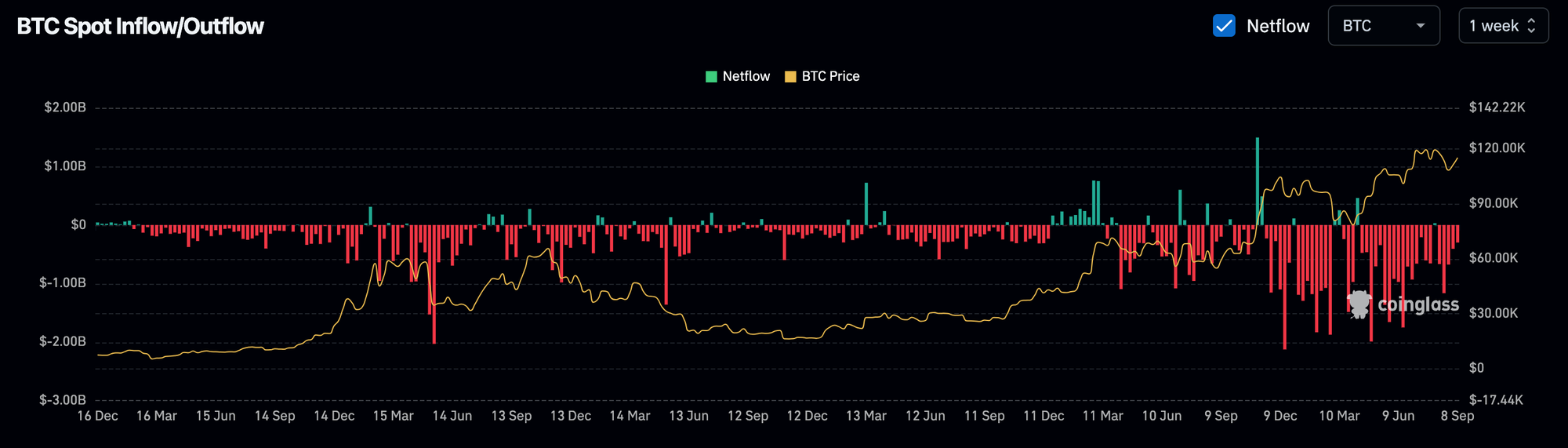
Weekly clusters of outflows suggest coins are leaving venues. Rallies backed by outflow streaks often travel better than rallies funded by repeated inflows.
Practical Guide Rails
Use netflows with trend and context, not as a standalone trigger.
- Outflow streak during an uptrend: constructive, prefer buying dips over chasing strength.
- Inflow streak during weakness: potential sell pressure, tighten risk and wait for repair.
- Big daily spike without follow-through: often repositioning, ignore unless the weekly agrees.
- Mixed venue flows: treat as neutral until a clear direction forms.
Common Traps To Avoid
- Wallet reclassifications and exchange housekeeping: can look like massive flows. Check provider notes.
- Stablecoin confusion: BTC netflows are separate from stablecoin issuance, do not mix the signals.
- Chain congestion and batching: delayed settlements can bunch flows, watch multi-day totals.
- Assuming outflows are always bullish: OTC desks and derivatives exist, pair flows with price acceptance.
Pair Netflows With Other Dials
Exchange reserves: stock of BTC on venues. Outflows plus falling reserves often means tighter float.
Realised PnL Ratio or SOPR: shows whether the market accepts realised profit. Outflows plus RPLR above 1.0 is often healthier.
CDD or VDD: older coin spending. Inflows plus VDD spikes can raise distribution risk.
Funding and open interest: inflow streaks plus jumpy funding can mark stress, not strength.
A Weekly Workflow You Can Reuse
- Toggle daily for colour, then judge weekly for the decision.
- Log the 7-day netflow versus its 90-day median, note streaks.
- Check exchange reserves trend, rising, falling, or flat.
- Cross-check RPLR or SOPR, CDD or VDD, funding, open interest, look for alignment.
- Act only when flows and price agree, persistence over headlines.
Mini FAQs
Which Is Better, Daily Or Weekly?
Weekly for action, daily for context and event detection.
Are Outflows Always Bullish And Inflows Always Bearish?
No. Direction, persistence, and venue mix matter most.
Do The Same Rules Apply To Altcoins?
Sometimes, but tagging and coverage are weaker. Treat alt netflows with extra caution and triangulate with liquidity data.
If this helped you separate flow noise from real signal, join Alpha Insider for weekly timing windows, dashboards, and member videos. Fewer mistakes… cleaner execution… more conviction.
Alpha Insider members get:
➡️ Kairos timing windows to plan entries before the crowd moves
➡️ A full DCA Targets page with levels mapped for this cycle
➡️ Exclusive member videos breaking down charts in plain English
➡️ A private Telegram community where conviction is shared daily
This isn’t noise… it’s the full playbook.
Legal & Risk Notice
This guide is for education only… not financial, investment, legal, accounting, or tax advice. Nothing here is a recommendation to buy, sell, or use any product or service. Cryptoassets are high risk… prices can go to zero… only use amounts you can afford to lose. Availability and legality vary by country… check your local rules before acting. You are responsible for your own decisions.


Discussion