


SOPR measures whether Bitcoin being spent on-chain is being realised in profit or in loss by comparing the value when coins were created with the value when they are later spent. When SOPR holds above 1.0, profit-taking is being absorbed more easily. When SOPR stays below 1.0, losses are being locked in and the 1.0 level often becomes resistance.
What Is SOPR?
SOPR stands for Spent Output Profit Ratio. It measures whether coins that move on-chain are being spent at a profit or at a loss.
The metric compares the value of coins when they were created with the value when they are later spent. That makes SOPR a behavioural indicator, not just a price indicator.
Simple read: SOPR above 1.0 means the average coin spent during the period moved at a profit. SOPR below 1.0 means the average coin moved at a loss. SOPR at 1.0 is breakeven.
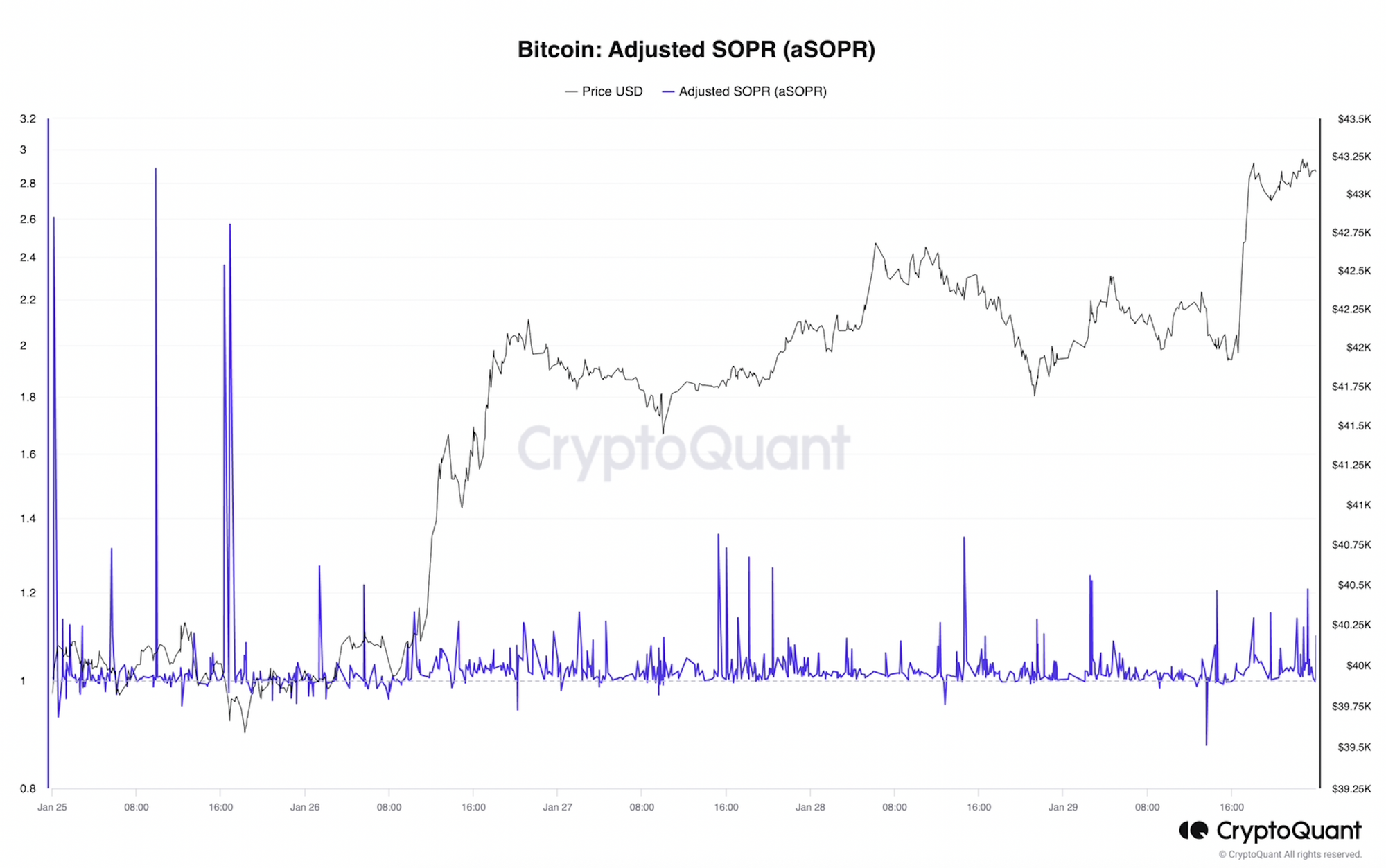
The chart below shows adjusted SOPR, often called aSOPR. This version filters very young outputs, which can make the profit and loss regime easier to read.
How Is SOPR Calculated?
SOPR is built from spent outputs. For each spent output, the calculation compares the value when the coin was created with the value when it was later spent.
- Take all spent outputs during the chosen period.
- Compare the value of each output when created with the value when spent.
- Aggregate those ratios to create SOPR for the period.
Adjusted SOPR removes very young outputs. That helps reduce short-term distortion from self-spends, reshuffles, and very short-lived movement. For market regime work, aSOPR on a weekly chart is usually cleaner than raw daily SOPR.
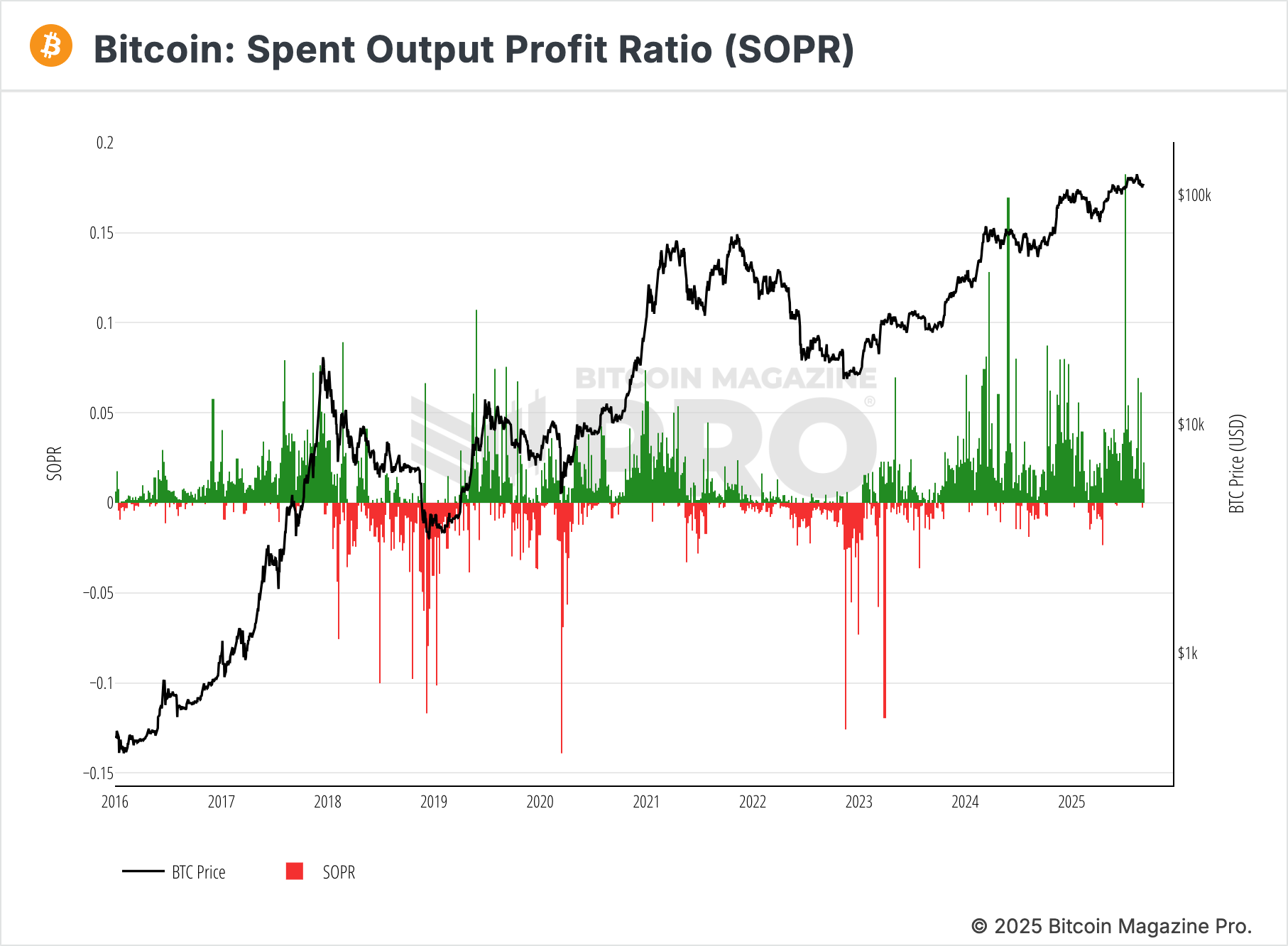
The broader SOPR chart below shows how the metric behaves across cycle phases, including periods where the market spends in profit and periods where loss realisation dominates.
How To Interpret The 1.0 Line
The 1.0 line is the main SOPR threshold. It marks breakeven for the average spent coin.
Key SOPR Variants You Will Use
aSOPR
Adjusted SOPR filters very young outputs. This is usually the cleanest version for regime work because it reduces short-lived distortions from self-spends and quick reshuffles.
STH-SOPR
Short-Term Holder SOPR focuses on newer buyers. It is useful for identifying stress in recent market participants, especially when price trades near short-term holder cost basis.
LTH-SOPR
Long-Term Holder SOPR focuses on older supply. When it rises sharply during strength, it can show older holders distributing into a rally. That does not make the signal bearish by itself, but it changes the quality of the move.
A Simple SOPR Workflow You Can Reuse
- Open aSOPR on a weekly view and mark whether it is above, below, or testing 1.0.
- Check whether the move is persistent or just a short-lived cross.
- Compare price with Market Realised Price, STH Realised Price, and LTH Realised Price.
- Inspect Realised PnL Ratio and realised profit and loss to judge whether the market is absorbing profit-taking or locking in losses.
- Add CDD or VDD to see whether older coins are contributing to the move.
- Form the read only after the behaviour, cost basis, and spending-age signals point in the same direction.
Common trap: SOPR is not a trigger. A single cross above or below 1.0 can reverse quickly. The useful read comes from persistence and confirmation across related indicators.
SOPR feeds the Absorption and Spending score inside the Bitcoin Barometer. See where the Absorption and Spending family sits in the current cycle.
See the Bitcoin Barometer →Mini FAQs
This content is for education only and does not constitute financial advice. Crypto assets are volatile and you can lose money. Always do your own research and consider your risk tolerance before making any investment decisions.


Discussion